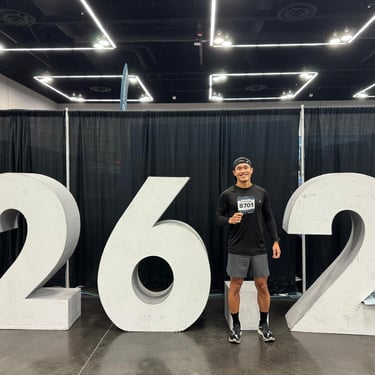
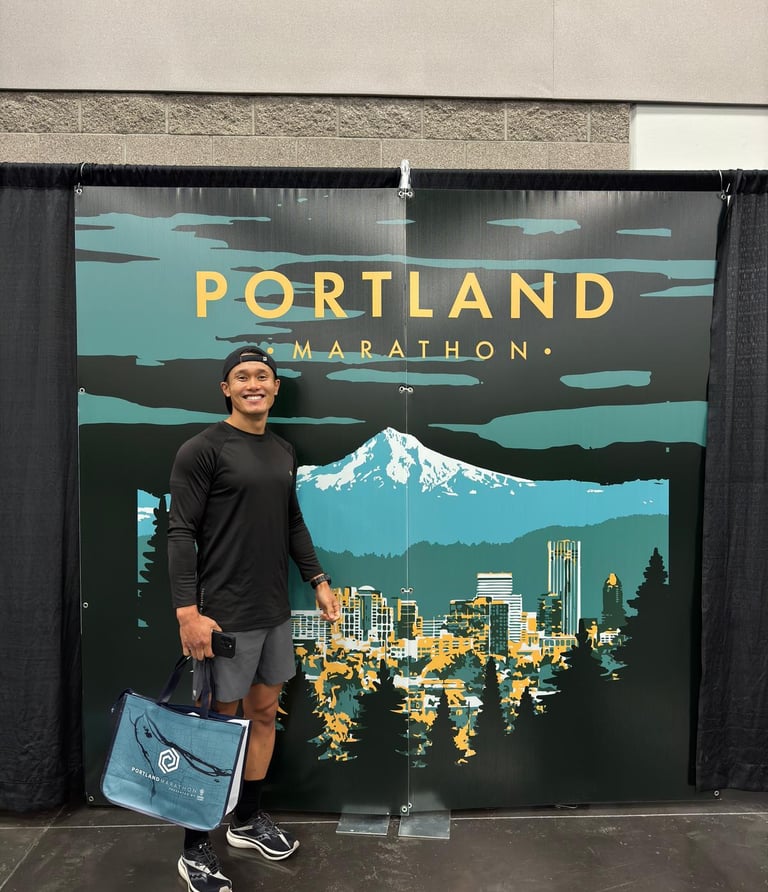
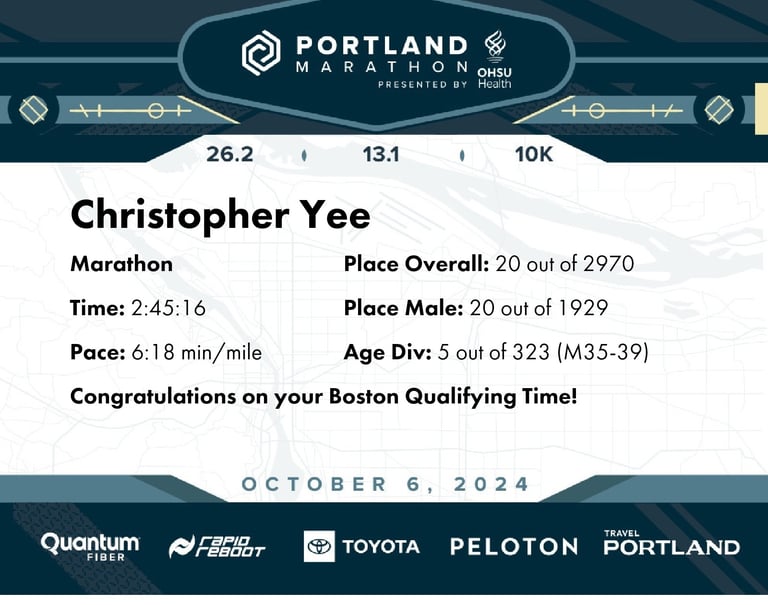
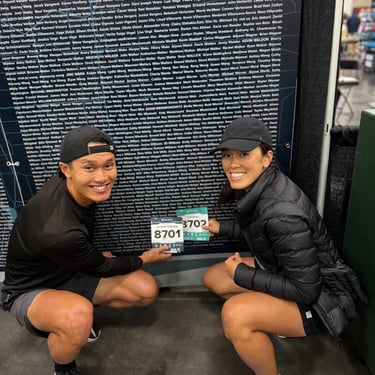
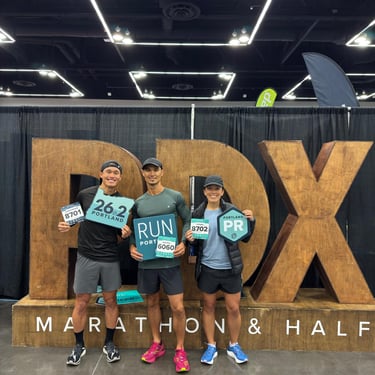
My goal for the season was a sub-2:45 marathon. My official best was 2:51:20 (Rock 'n' Roll Seattle, 2018), and my unofficial training best was 2:48:20. Portland's rolling course — 286m of elevation gain — is tougher than the BMO course where I'd set my 2:52:51 PB earlier that May. This one was also special: my sister and brother-in-law raced the half, and our mom came out to support all of us.
Nutrition
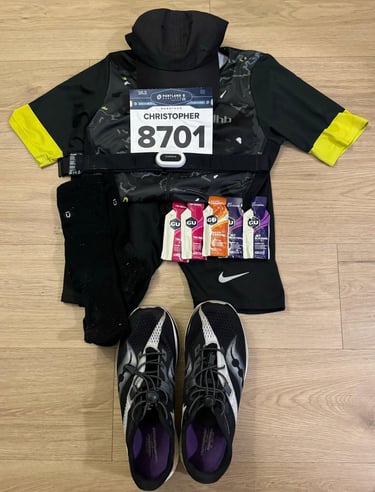
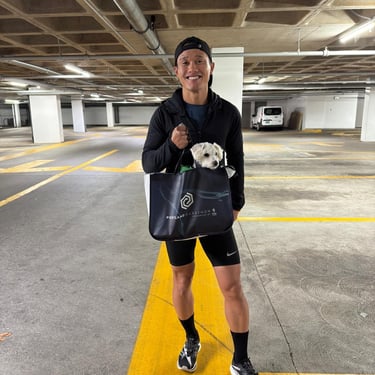
Despite an eight-hour drive down, I stuck to my usual routine — the same pasta dinners the two nights prior, electrolytes the day before and morning-of, oatmeal with banana and Nutella, coffee two hours out, one caffeinated gel twenty minutes before the gun.
The plan was a gel every 6K plus water and NUUN on course. I assumed I could restock at aid stations, but with the 10K, half, and full all merging on course, stations were jammed with walkers, and I skipped nutrition to save time. By the halfway point I was already feeling dehydration.
Lesson: have a contingency plan. Don't rely purely on course nutrition — I'll consider carrying a small flask at future races.
Results
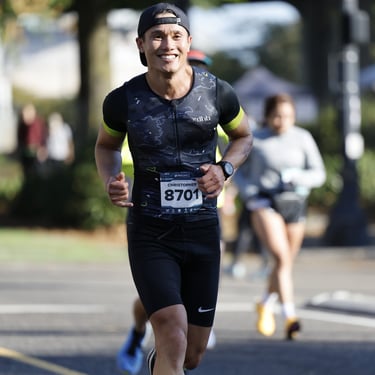
I missed my time goal by sixteen seconds officially, though my watch had me at 42.55km — I believe I'd have hit sub-2:45 at the true distance, minus time lost weaving through aid stations and crowds. Either way, I qualified for both the 2026 Boston Marathon and 2025 New York Marathon. Thank you to my mom, the spectators and volunteers, and the Fraser Street Run Club for the training grind.
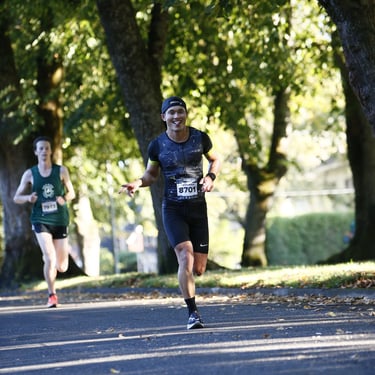
Lesson: believe in the process. I set an ambitious goal at the start of the season and trusted the training to get me there.
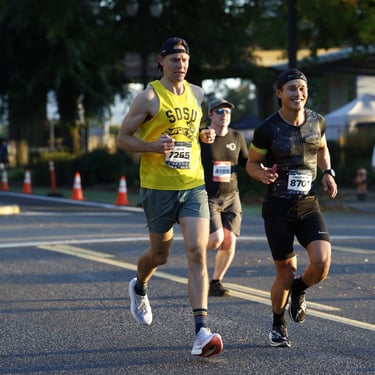
Weather was close to perfect — 9°C at the start climbing to about 15°C, sunny with a slight breeze; leaving my sleeves and base layer at home turned out to be the right call.
Training
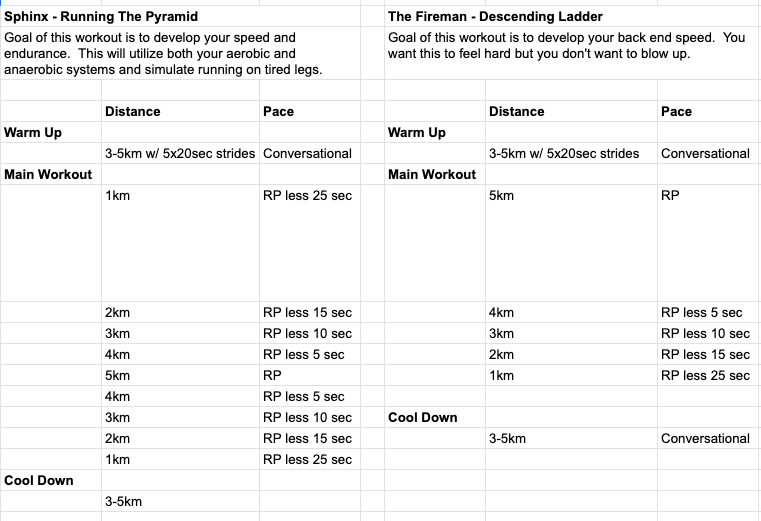
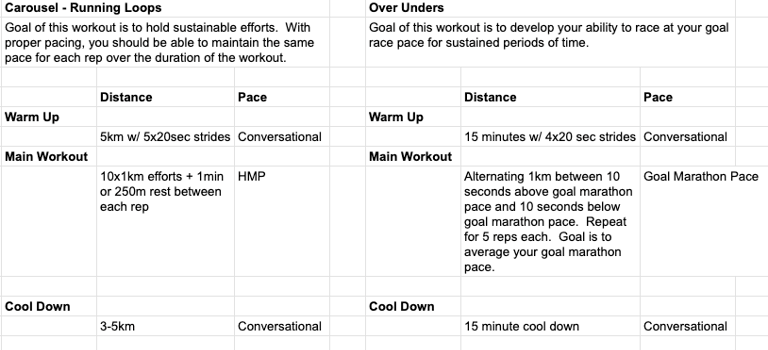
This build came right off Ironman Penticton, where I'd crashed and picked up a niggling knee pain, road rash, and hamstring tightness. After a week to recover, I had about three weeks to layer in speed and hill work plus a taper — tighter than usual, so I trained at higher intensity than a typical marathon build: shorter hill runs during the week, longer (30km+) speed sessions on tired legs on weekends. Weekly volume was actually lower than my BMO build (77/83/85km across three weeks), but the specificity let my body absorb the work between sessions.
Lesson: volume for its own sake isn't always best. Rest and recovery can outperform logging junk miles.
I cut taper volume to 56km and 24km across the final two weeks, kept the intensity, and leaned on stretching and a visit to my physio to loosen up the hamstring.
Race
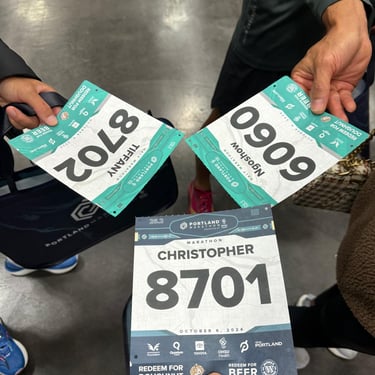
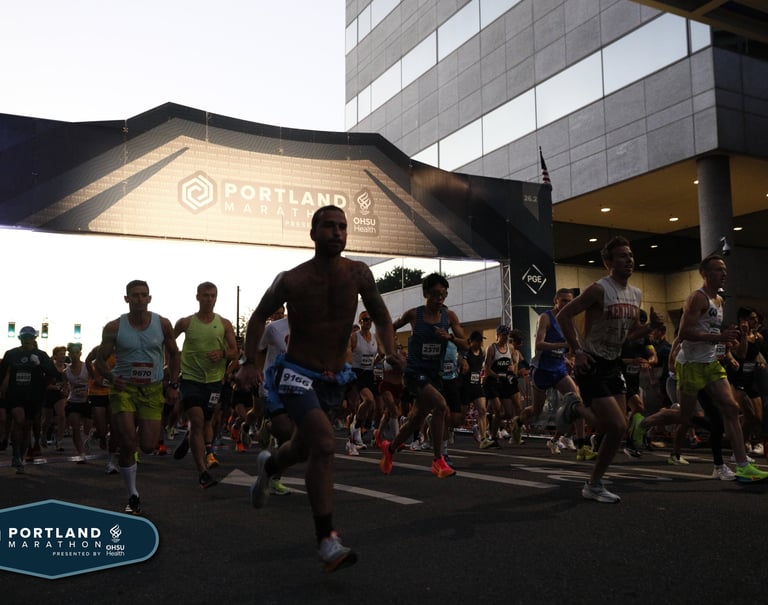
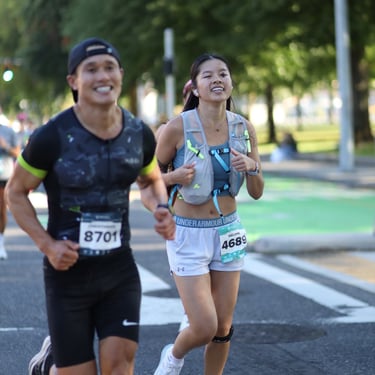
First race outside Canada in over five years. Since the 10K and marathon started together, the pace was fast from the gun despite immediate uphills. I stuck to my 3:52–3:55/km target while others sped past, ran mostly alone for six kilometers, then linked up with Jacob and later Mikah for the next stretch through the city — heads-down enough that I barely noticed the neighborhoods we passed through.
Lesson: don't get so locked into "racing" that you forget to enjoy the atmosphere.
Around the half, Jacob pulled ahead and a pack of six marathoners caught up to me; I tucked in and drafted them through neighborhoods, a golf course, and past Reed College, with spectators cheering from porches and balconies. I'd built a small buffer by 35K, then felt my legs start cramping and eased off slightly through the final climbs and descents back to Naito Parkway. The last kilometer, packed with spectators, funneled us to the finish. I found my sister, brother-in-law, and mom, who told me I'd placed top five in my age group — even though the finish clocks were showing the wrong time.
What's next
The 2024 season is closed. I've already got the Canyons 100K Ultramarathon in April, Victoria Half Ironman in May, Ironman California in October, and CIM in December on the calendar. In the meantime: five months traveling through South America and Southeast Asia.
---