
Turning thirty-five changed how I define athleticism. I've always pushed my mind and body toward their limits, and crossed the line into injury more than once along the way — this is how my training philosophy has shifted.
I've always been competitive — soccer growing up, endurance sport in my twenties. Full Ironmans, half-Ironmans, duathlons, marathons, half-marathons, 10Ks. For years I focused purely on building a big aerobic engine, treating strength training as unnecessary weight to haul around for hundreds of kilometers. That view eventually cracked.

Prep for Ironman Korea 2019 was derailed by a nagging pain in my left glute that I gritted through for almost a year before finally getting diagnosed with Ankylosing Spondylitis — an inflammatory disease that can, over time, fuse the bones in the spine. Elevated inflammation can be driven by stress, poor sleep, or diet, and made worse by poor posture, limited mobility, and muscular imbalance.
I'd assumed competing across triathlon and marathon distances made me well-rounded. In reality, I was a sub-par swimmer, a sub-optimal cyclist, and a decent runner — fragile in exactly the ways single-discipline endurance athletes tend to be, because I'd neglected strength, agility, and speed.
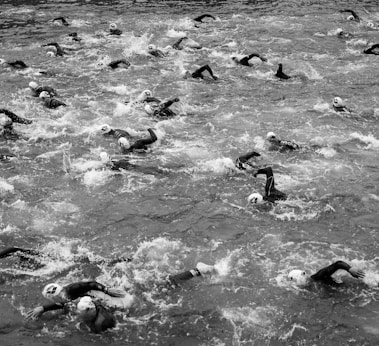
Lesson: being singularly focused on one outcome can leave other areas underdeveloped. Lean into your strengths, but don't ignore the rest — a gap in one area can become your Achilles heel, literally.
As a kid I looked up to Schwarzenegger, Stallone, Jay Cutler — the classic bodybuilder physiques. No amount of lifting or protein powder turned me into that. Eventually the obvious hit me: most of those "natural" physiques weren't natural at all, and today's algorithm-perfect gym content sells the same myth to a new generation.

Lesson: be selective about who you idolize. You might admire what someone has — are you willing to make the sacrifices they made to get it?
I came across Nick Bare, founder of Bare Performance Nutrition, who's built a following around exactly this combination of strength and endurance — he ran the California International Marathon in under 2:40, which is now one of my own goals. I've followed his approach for a couple of years and seen real benefits:

- Muscular adaptation — a bigger aerobic base from endurance work lets me sustain longer efforts, while progressive overload lets me push harder within them.
- Fewer overuse injuries — strength work stabilizes joints that pure single-sport training leaves exposed.
- Better muscle fiber recruitment across all three fiber types as fatigue sets in.
- Faster recovery — better sleep, better blood flow, and rest for the muscle groups not directly loaded that day.
- Looking and feeling more balanced — my arms used to be an afterthought; strength training fixed that, and yes, the mirror matters too.
Lesson: combining strength and endurance training pays real dividends for health and longevity.

Five principles I've landed on:
1. Identify your goals. Mine for 2024: sub-2:35 marathon, sub-10-hour Ironman, and Boston/New York qualifiers. 2. Match volume and duration to those goals, periodizing as the event approaches — I'm currently running roughly a 40/60 strength-to-endurance split during base building, shifting toward endurance closer to race day. 3. Chase incremental gains. Dave Brailsford's 1%-improvements-everywhere philosophy from British Cycling applies well when you're training across more disciplines — more surface area for small wins. 4. Fuel properly. Both disciplines are demanding; cutting one macro category too aggressively leaves you flat and slows recovery. A nutritionist is worth the consult. 5. Rest is not optional. Periodized recovery — a lighter week here and there — drives more adaptation than it costs you.
I don't need to lift a bus or run for hours in daily life. But I want a body that's genuinely functional — one that can chase my future kids around or toss them onto the bed without a second thought. Whatever your own reason is for wanting to feel stronger or move better, hybrid training has been the most effective path I've found.
---